Friday, March 28, 2014

PROGRAM PEMBERSIHAN SUNGAI KILIM 2014

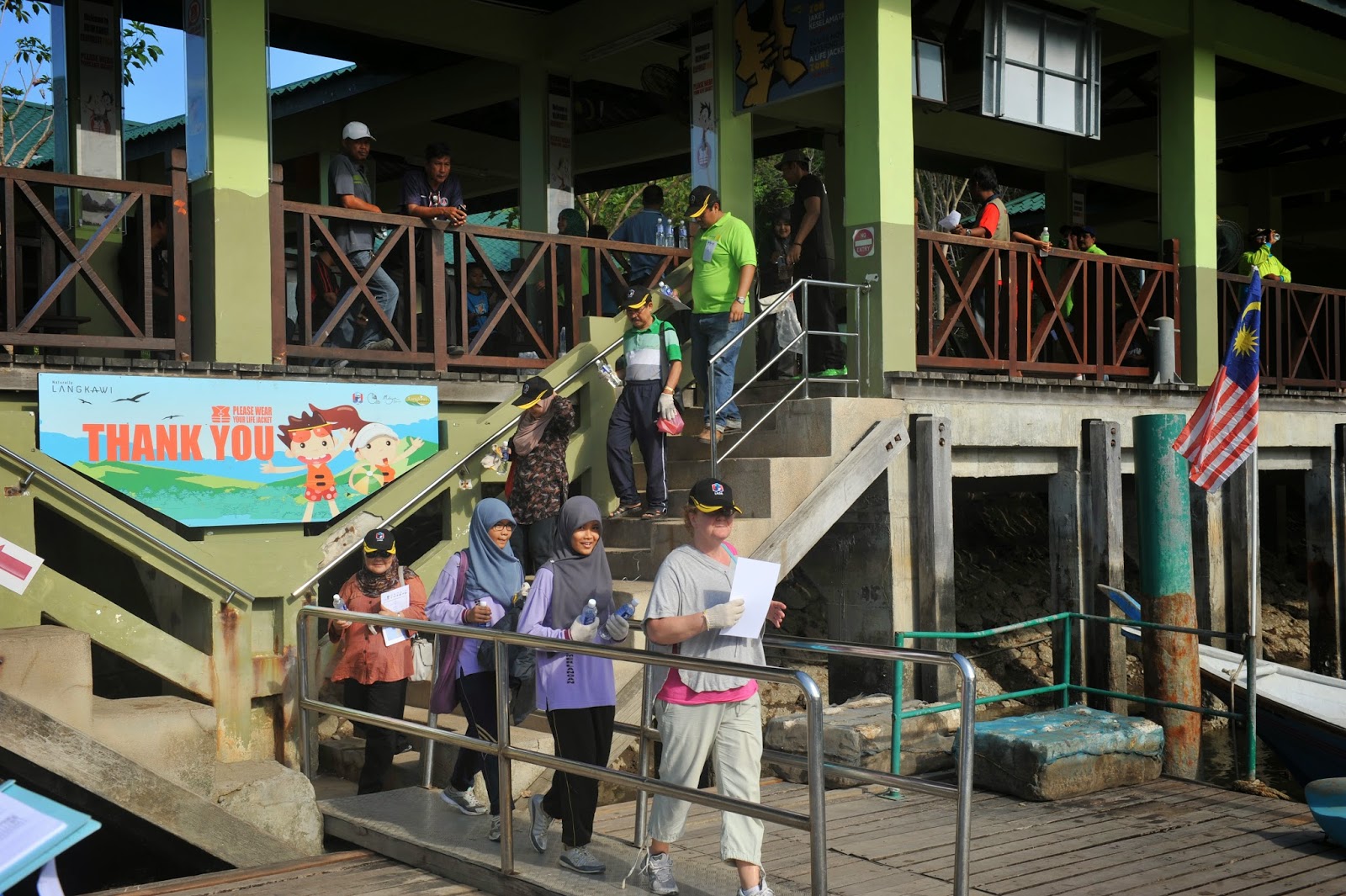
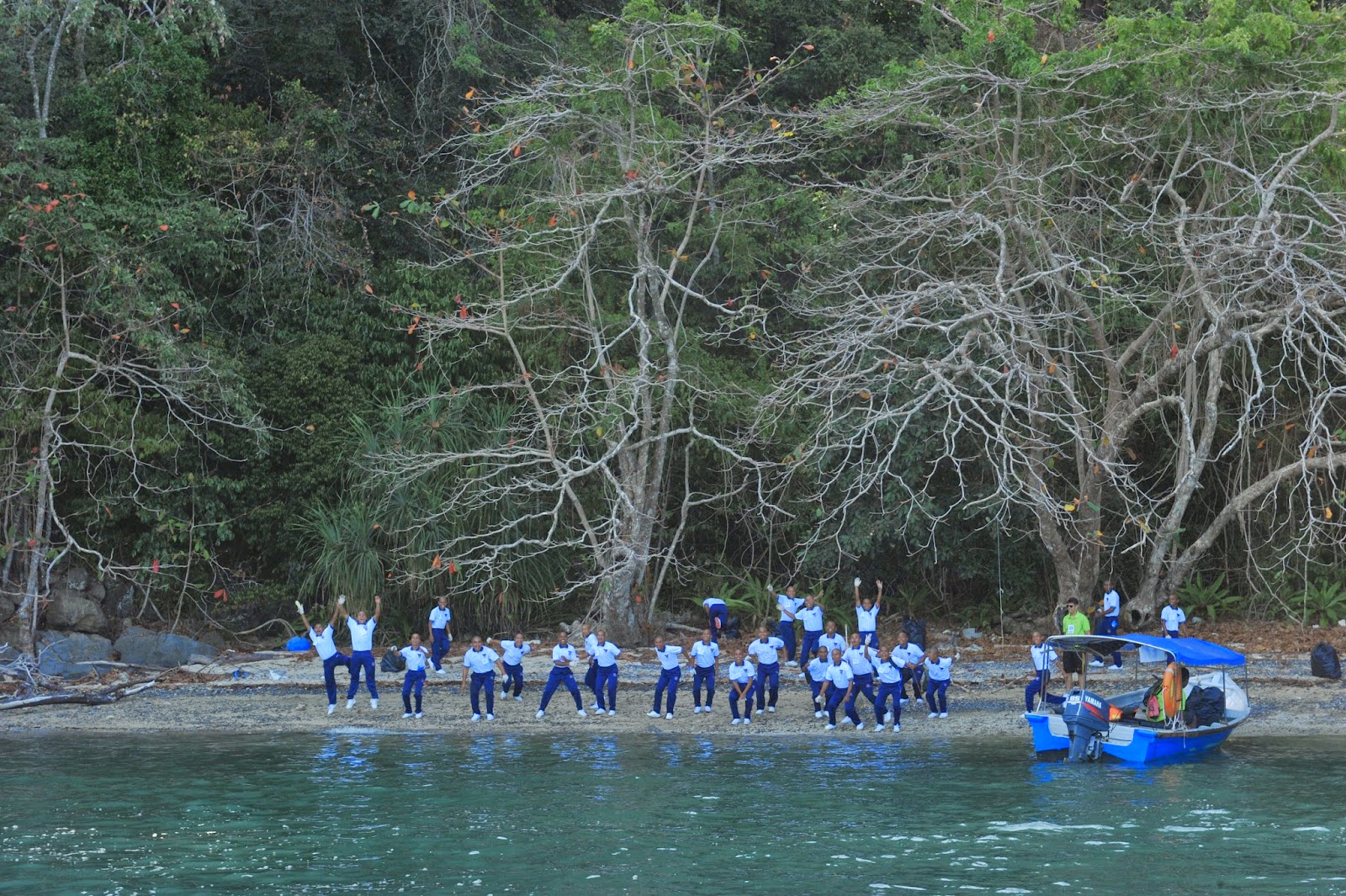
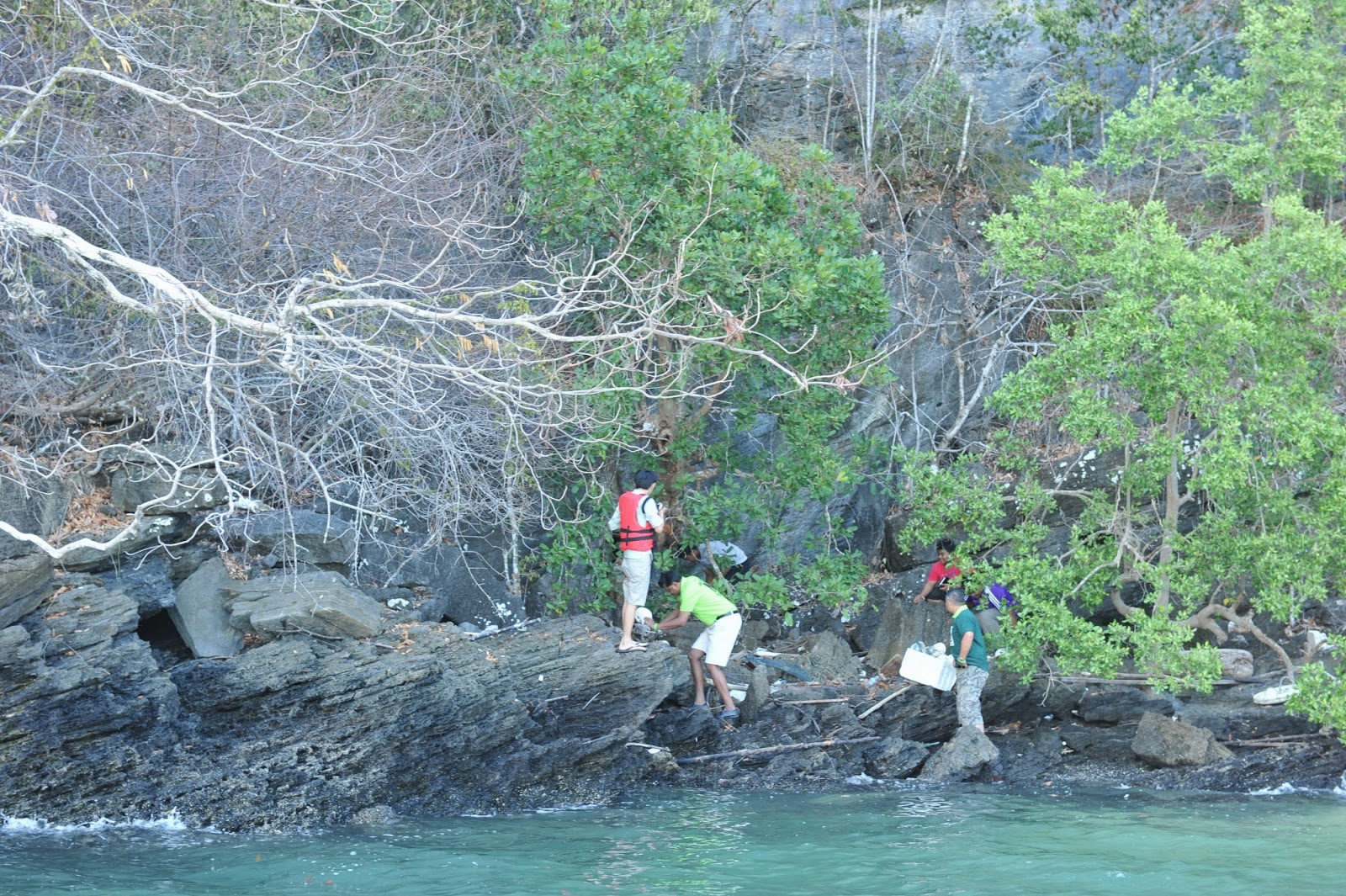
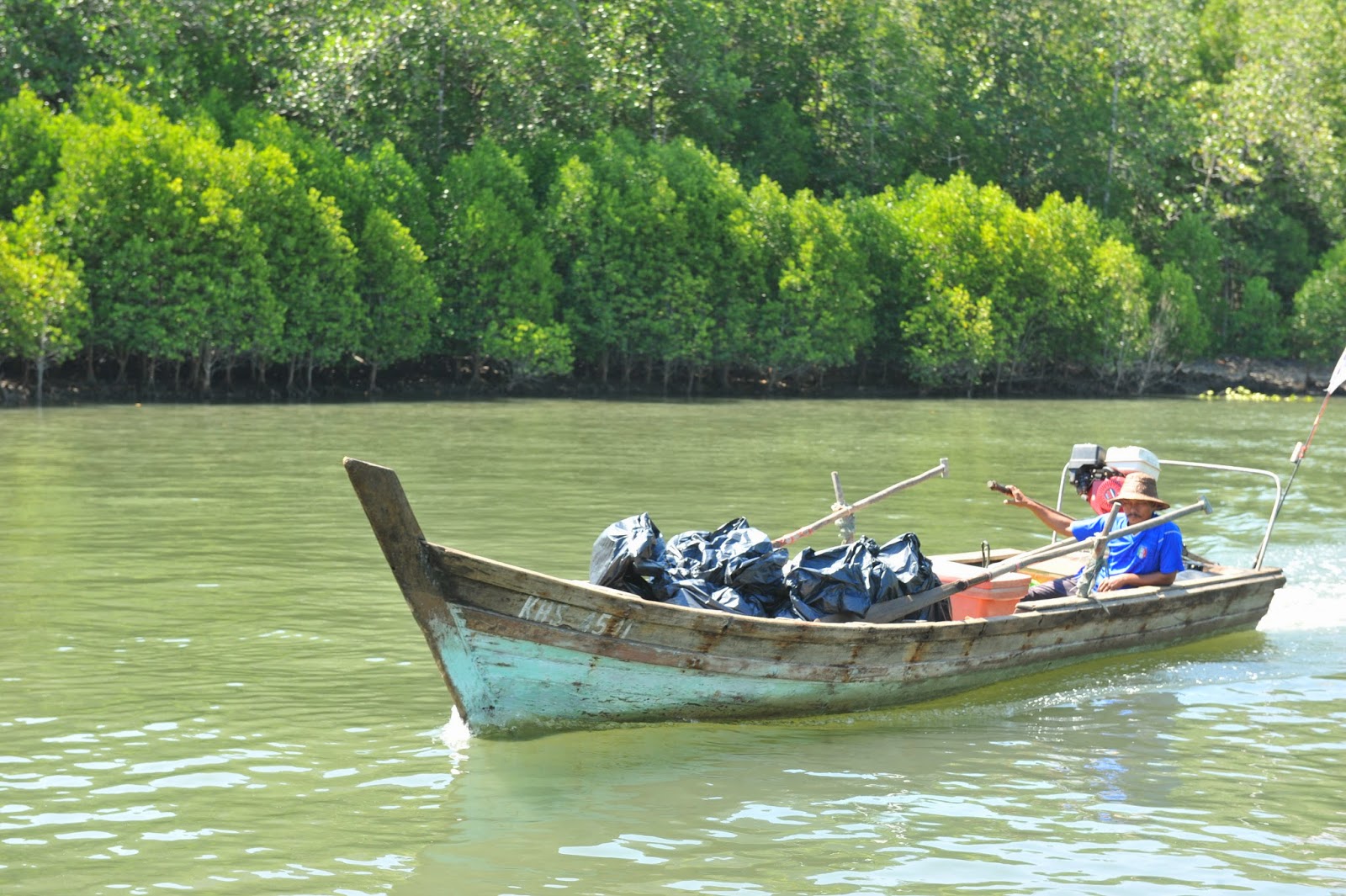
Seramai 1,400 sukarelawan telah menyertai program ini yang julung kali dianjurkan oleh Kelab Rotary Langkawi pada 15 Mac 2014. Sukarelawan terdiri daripada pelajar sekolah, kakitangan agensi kerajaan, pertubuhan NGO lain dan penduduk kampung. Program ini bertujuan untuk membersihkan sungai di Kilim Karst Geoforest Park daripada sampah yang terapung dan dalam kawasan hutan bakau seperti tong, plastik, tali dan pelbagai lagi bahan yang mencacatkan pemandangan di sekitar Kilim. Program ini memberikan pendedahan dan kesedaran mengenai usaha konservasi dan rasa sepunya kepada alam sekitar Langkawi. Di penghujung program ini, hampir seratus kilogram sampah telah dikumpulkan daripada sungai dan hutan bakau oleh sukarelawan.

Briefing to all participants


Participants Flag-off 

Some of the volunteers

Geosite of Teluk Mempelam 

Looking for rubbish between the limestone rocks

Rubbish in mangrove

Catch of the day


Almost 1000kg rubbish that we manage to collect.
Our heroes and heroins!!!

KILIM’S RIVER CLEAN UP 2014

Almost 1,400 volunteer has shown up as early as 7.30 in the morning for this program organized for the first time by Langkawi Rotary Club. The volunteer are from various background and agencies from student, government officer, other NGO members and also local communities. This program aims to clean up the rivers from floating rubbish and all sort of other materials such as ropes, barrels and plastics and also to educate and create awareness the volunteer and public to care and have  sense of belonging to our Langkawi’s environment. At the end of the program, we manage to accumulate almost 100 kg rubbish from the river and mangrove forest.

Thursday, January 23, 2014

Program Konservasi dan Gotong-Royong Langkawi Geopark 2013

Untuk menutup tirai tahun 2013, Langkawi Geopark telah mengadakan Program Gotong-Royong di Dayang Bunting Marble Geoforest Park dan Machinchang Cambrian Geoforest Park. Program ini melibatkan komuniti di Langkawi dan juga agensi-agensi kerajaan di Langkawi. 

To close the year of 2013, Langkawi Geopark held a Gotong-Royong Programme in Dayang Bunting Marble Geoforest Park and Machinchang Cambrian Geoforest Park. This program involves the local communities as well as government agencies.

30 Disember 2013
Seramai 100 orang penduduk kampung daripada 6 mukim di Langkawi telah turut serta dalam program gotong-royong yang melibatkan 3 buah pulau dalam kawasan Dayang Bunting Marble Geoforest Park iaitu Pulau Ular, Pulau Beras Basah dan Pulau Dayang Bunting. Hampir 40 beg sampah telah dikumpulkan apabila program berakhir pada jam 12 tengahari. Selain bergotong-royong membersihkan kawasan pulau yang menjadi tumpuan pelancong, komuniti juga diberikan peluang untuk melawat geotapak dan diberikan penerangan mengenai geologi dan flora fauna yang terdapat di pulau-pulau tersebut. 

About 100 peoples  from 6 mukim (sub-districts) in Langkawi had participated in a gotong-royong programme involving 3 islands in Dayang Bunting Marble Geoforest Park; Pulau Ular, Pulau Beras Basah and Tasik Dayang Bunting of Pulau Dayang Bunting. Everybody had gathered as early as 8 am and were divided into 3 groups of each 3 islands.  We had succeed to gathered almost 40 garbage bags when the program ends at 12 noon. The local communities of Langkawi is also given the opportunity to visit some geosites and they had been given explanation of the geology and biology of the islands.


31 Disember 2013
Pada hari kedua program gotong-royong ini pula melibatkan seramai 120 kakitangan daripada agensi kerajaan beruniform di Langkawi seperti Bomba, Tentera Laut, Agensi Penguatkuasa Maritim Malaysia dan staf Panorama Langkawi serta staf baru LADA.
Program gotong-royong ini kali ini melibatkan trek penyelenggaraan kereta kabel sepanjang hampir 3 kilometer yang akan memakan masa selama 2 jam perjalanan. 
Peserta gotong-royong telah membersihkan trek tersebut daripada pokok-pokok hutan yang telah mati,  dan menghalang laluan serta turut membersihkan  sampah di laluan. Selain daripada program pembersihan, peserta juga turut diuji ketahanan fizikal dan mental kerana perlu melalui trek hutan dan menuruni gunung. 

On the next day,  a total of 120 personnel  of uniform  agencies such as the Fire Department, Navy, maritime enforcement agency as well as the staff of Panorama Langkawi (manager of SkyCab) and LADA's new staff has joined the programme  at Gunung Machinchang - SkyCab maintenance trail. 
The  track is nearly 3 kilometers which will take about 2 hours to finish.  Participants are tasked to clean the track from fallen and dead trees and clean out the path from  trash. Participants also tested on physical endurance and mental because going through the forest tracks and down the mountain.

Penutup
Program seperti ini dapat meningkatkan kesedaran masyarakat dalam menjaga kemudahan dan kawasan pelancongan di Langkawi. Selain itu, aktiviti ini juga dapat memupuk semangat bekerjasama di kalangan komuniti dan agensi kerajaan di Pulau Langkawi
Langkawi Geopark akan merancang dan melaksanakan program-program konservasi yang lebih berkesan pada tahun 2014. Dan mengharapkan akan dapat sokongan yang lebih kuat dan penyertaan yang lebih ramai. 
Marilah bersama-sama menjaga kelestarian Langkawi Global Geopark untuk generasi akan datang!!!

Closing Remark
Langkawi Geopark will plan and organize more effective conservation program in 2014. And look forward to be able to receive a stronger  support and larger  participation from all of you.   
Let us together make Langkawi Global Geopark will be sustain for future generations!!!


Sunday, June 26, 2011

Langkawi Geopark


Langkawi, a cluster of 99 islands separated from mainland Malaysia by the Straits of Malacca, is a district of the state of Kedah in Northern Malaysia and lies approximately 51 km west of Kedah. The total land mass of the islands is 47,848 hectares, while the main island of Langkawi itself has a total of 32,000 hectares. The main island spans about 25 km from north to south and slightly more for east and west. The coastal areas consist of flat, alluvial plains punctuated with limestone ridges. Two-thirds of the island is dominated by forest-covered mountains, hills and natural vegetation.

Langkawi Geopark is Malaysia’s first geopark and was included in the UNESCO Global Geoparks Network as the 52nd member. What we have in Langkawi today is a result of these various processes and the prolonged weathering process that took place ever since the Langkawi land was brought to the surface around 220 million years ago.

Langkawi Archipelago possesses the oldest rock formation and the most complete Palaeozoic sedimentary rock sequence in the South-east Asia region.

Langkawi possesses some very interesting geological history, unique geodiversity and some very beautiful geological landscape, together these features formed many geoheritage sites to support Langkawi Geopark.

Complementing this rich geodiversity is the island’s rich flora and fauna. These rich natural resources together with diverse local culture have always been the attraction in promoting Langkawi as leading ecotourism hub in the region.

90 geosites has been identified within Langkawi Geopark. Some of the geoheritage sites are grouped together within larger conservation unit called the geoforest park while others are classified into either geological monument or protected geosites. Geoforest park is a conservation area with combination between geology and forest. Langkawi Geopark is the first geopark in the world that ever used such initiative for nature conservation. Most of the geoheritage sites are located within the present forest reserves and thus are protected under the conservation law of the Forestry Department. There are three geoforest parks in Langkawi Geopark; Machinchang Cambrian Geoforest Park, Kilim Karst Geoforest Park and Dayang Bunting Marble Geoforest Park. Each geoforest parks have their own strength and outstanding features. Machinchang Cambrian Geoforest Park hosts the oldest rock formation in Malaysia that is Machinchang Formation and Langkawi Geopark Cable car operating at the peak of Machinchang Mountain. Kilim Karst Geoforest Park features breathtaking islands karst landscape and home to two species of eagles and other wildlife and mangroves. Dayang Bunting Marble Geoforest Park also featured karstic landscape but from a mixture of marble of Chuping Formation and limestone of Setul Formation. This park has some fine wave related features such as sea stacks, sea arches and sea caves. The fresh water lake named Dayang Bunting Lake formed from doline and local community believed the lake could fulfill wishes for childless married couples to gain fertility.

The realization of Langkawi Geopark is a testimony to endless effort to make these islands a premier ecotourism destination in this part of the world.

Saturday, June 25, 2011

Global Geoparks Network (GGN)


A Geopark is defined by the United Nations Educational, Scientific and Cultural Organization (UNESCO) in its UNESCO Geoparks International Network of Geoparks programme as follows:
A territory encompassing one or more sites of scientific importance, not only for geological reasons but also by virtue of its archaeological, ecological or cultural value.
The Geoparks initiative was launched by UNESCO in response to the perceived need for an international initiative that recognizes sites representing an earth science interest.[1] Global Geoparks Network program aims at enhancing the value of such sites while at the same time creating employment and promoting regional economic development.For the purposes of the program the organization developed the new internationally recognized label 'UNESCO Geopark'. The idea of UNESCO is to label up to 500 Geoparks worldwide. The UNESCO Geopark Program works in synergy with UNESCO's World Heritage Centre and Man and the Biosphere (MAB) World Network of Biosphere Reserves.
The International Network of Geoparks (INoG) is a UNESCO programme established in 1998. According to UNESCO, for a Geopark to qualify in the INoG, it needs to:
- have a management plan designed to foster socio-economic development that is sustainable (most likely to be based on agritourism and geotourism)
- demonstrate methods for conserving and enhancing geological heritage and provide means for teaching geoscientific disciplines and broader environmental issues
- have joint proposals submitted by public authorities, local communities and private interests acting together, which demonstrate the best practices with respect to Earth heritage conservation and its integration into sustainable development strategies.